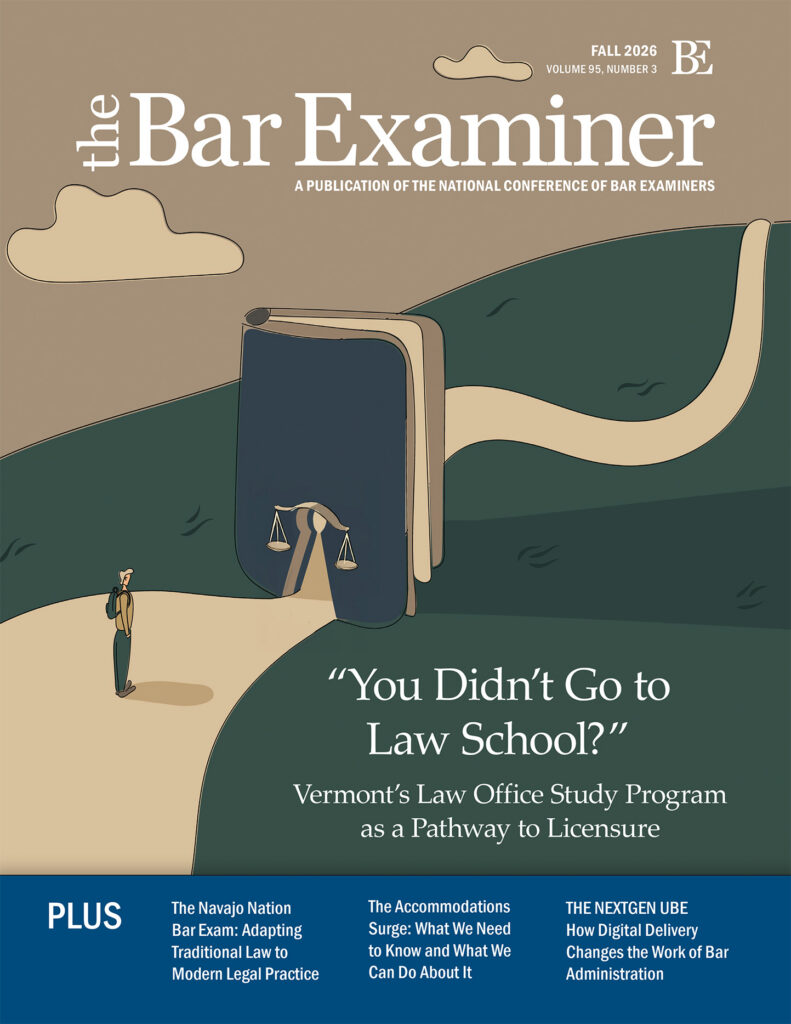
This article originally appeared in The Bar Examiner print edition, Fall 2026 (Vol. 95, No. 3), pp. 1–2.By Augustin Rivera, Jr.
 The Importance of Our Work
¡Saludos, bar admissions community!
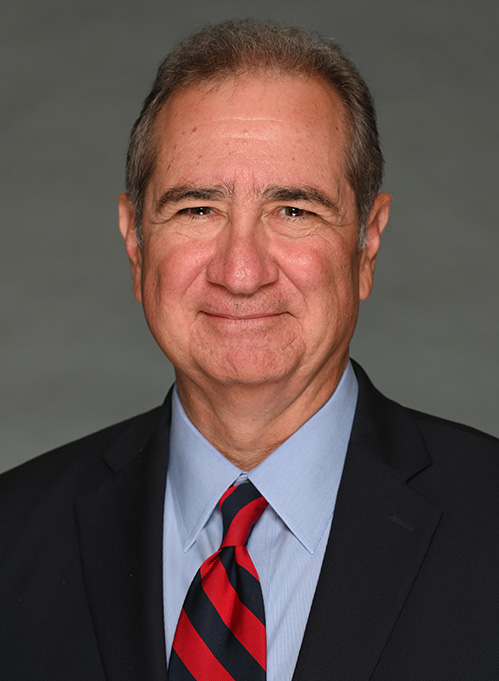
I am excited to welcome you to a new NCBE board year and to introduce myself. I’m a lawyer from Texas, where I serve as General Counsel for Del Mar College, a public community college in Corpus Christi. Although I began my legal career as a civil trial and appellate advocate, a fortunate set of circumstances allowed me to enter the practice of higher education law just over two decades ago. I have held my current position full time since 2015. As a lifelong believer in the promise and transformative power of higher education, I am grateful for the opportunity to help my college fulfill its student-driven mission of “provid[ing] educational pathways that transform lives, build partnerships, and enrich communities.”1
My bar admissions work began in 2011, when the Texas Supreme Court appointed me to the Texas Board of Law Examiners. In 2018, I was elected to the NCBE Board of Trustees; at its August meeting in Madison, the outgoing chair, Darin Scheer, handed me the gavel to begin my two-year term! I want to thank our good friend, Darin, for his steady and extraordinary leadership in keeping us focused and always moving forward through the past two consequential years. And to our incredible board members, thank you for entrusting me with this awesome responsibility. I will do my best.
As I begin my new NCBE leadership role, I am aware (as you are) that our multifaceted and important work in bar admissions is in motion on multiple levels, and there will be challenges and opportunities in the year ahead. But I look forward to embracing those challenges and maximizing the opportunities they present, together.
As most of you know, this most recent July administration saw NCBE officially roll out the much-anticipated NextGen UBE in ten jurisdictions. The inaugural administration was successful for many, although we understand the disappointment felt by examinees in Maryland, Missouri, and Washington who encountered venue-specific technology issues (see here for more in Judy’s column). Despite the initial growing pains, I am supremely confident that the post-July exam work already accomplished by our brilliant team of “exam engineers” (led by NCBE President Judy Gundersen and NCBE Chief Product Officer Kara Smith, PhD) has put us in a strong position for smoother administrations going forward. More to come, stay tuned!
At the NCBE/CBAA Annual Meeting, also held in Madison this past August, I had the opportunity to make the closing remarks to the administrators in attendance, and I started by thanking them for their “commitment and hard work to this time-honored and incredibly important task—the credentialing of lawyers to practice law.” I echoed the inspiring opening comments Justice Kevin Brobson of the Pennsylvania Supreme Court delivered at the Annual Bar Admissions Conference held in Philadelphia last May.
Those of you in attendance heard Justice Brobson invoke the patriotic spirit of his historic city and the 250th anniversary of the signing of the Declaration of Independence: “Your work today is as important as it was in the days of Hamilton, Jefferson, Wilson, and Morris,” and “every attorney who passes the bar . . . is because you’ve done your job!” Judy’s remarks at ABAC struck a similar note: “We are all stewards of the profession.”
While concluding my remarks in Madison, I spoke about three extraordinary Texas lawyers: Edna Cisneros of Raymondville, the Honorable Barbara Jordan of Houston, and Beverly Tarpley of Abilene.
In 1955, Edna Cisneros graduated from the University of Texas School of Law and became the first Mexican American woman to take and pass the Texas Bar Exam. She returned to her home county in South Texas and, one year later, she was elected district attorney and served for 29 years before retiring.
In 1959, the Honorable Barbara Jordan graduated from the Boston University School of Law and passed both the Massachusetts and Texas Bar Exams. In 1960, she returned to her hometown of Houston and began practicing law out of her parents’ home before getting involved in politics and beginning a remarkable, trailblazing career in public service.
In 1951, a force of nature also known as Beverly Tarpley graduated as the only woman in her class from the University of Texas School of Law. Beverly was such a prodigy that she had to wait until her 21st birthday to sit for the Texas Bar Exam! Six years later she was the first woman lawyer from Texas and the youngest lawyer to argue a case before the US Supreme Court.
I was privileged to know Beverly, and she was one of us. Among her many accomplishments, she also served on (and chaired) the Texas Board of Law Examiners and the NCBE Board of Trustees. She cared deeply about the important work of bar admissions and attorney credentialing, and she encouraged and inspired me to get involved.
Each of these legal powerhouses passed a bar exam. Despite the challenges and biases of their times, this achievement was unassailable evidence of their right and ability to practice before the bar.
And that is why, in this moment, our work remains so profoundly important.
Theodore Roosevelt believed deeply that: “Far and away the best prize that life offers is the chance to work hard at work worth doing.”2 It is an exciting time to work in bar admissions, and I’m glad we’re in this together. I look forward to connecting with you in the coming year.
Best,
Augustin Rivera, Jr.
Notes
- Del Mar College, “College Mission,” available at delmar.edu/becoming-a-viking/discover/about-us/mission-statement.html. (Go back)
- Theodore Roosevelt, The Key to Success in Life (Federated Publishing Company, 1916), at 12. (Go back)
Contact us to request a pdf file of the original article as it appeared in the print edition.